Sunday, November 10, 2013

Forgiveness is free


As is often the case, the words and image above seemingly came together of their own accord. I tried to change them more than once, thinking that "forgiveness is free" sounded rather banal. However, each time I replaced the words with something else, it simply didn't look or feel right.

And so my assignment is before me, to reflect on and make some sense of a phrase that I have discovered is far more enigmatic than it appeared at first glance.

Is forgiveness free? If I offer another forgiveness, does it truly cost me nothing? If I accept the forgiveness of another, is there never a price to pay?

And why this image?

Before I attempt any reflection on these questions, allow me to share a short but intriguing story.

After working for a few hours yesterday, I decided to take a short walk with my camera. The weather was seasonably chilly with a brisk wind and leaves were falling around me. I did not venture anyplace far or fancy this time. I walked two lots down from my house, noticing some of the beautiful colors still hanging onto the trees.

As I stood gazing upon the scene, I felt something slip into my left hand. This was a very odd sensation, given that I had not had my hand open or outstretched. I wasn't trying to catch any of the leaves falling around me nor was I grasping at anything.

I looked down into my hand and there was a thin, twisted taupe-colored leaf, nothing particularly special looking. I almost dropped it to the ground but thought twice.

I could not see any meaning or value to this little leaf but it is not every day that the heavens drop something into my hand. Perhaps I should hold onto it for a while, I thought.

I only walked around for a short while but I was very aware of this little leaf in my hand. It felt brittle and so I handled it with care, wondering why it had been given to me.

When I got back inside, I still puzzled. Perhaps I shall take a picture of it in my hand, I considered. I don't know why this seemed important but it did. So I changed the lens on my camera and walked back outdoors, in order to view it in natural light.

Somewhere in the process of this, I detected something I had not noticed before. The center of it was darker and a bit thicker than the edges. It was not a leaf but a seed pod! A seed had been cast out into the wind, to twirl its dance of chance and it had landed in my hand...

What could it possibly mean?

(I realize that the average reader may be thinking: "It probably means nothing. Why is she going on about this?")

Perhaps it caught my attention so for a couple of reasons.

One is that a seed is a very important thing. On a biological level, it holds within it the beginnings of life. Much of the life on this planet would cease were it not for seeds of some sort or another.

On a spiritual level, seeds are very important as well. When it comes to believing in and loving the Holy, it is often a seed that begins the process. Some little seed of wondering or longing implants itself in our hearts, perhaps remaining tenuous for months or even years before it germinates and grows.

This sacred seed also holds within it the beginnings of life. But in this case it is a Life that rescues us from the eternal death.

Hence, that this gift was a seed caught my attention once I recognized it for what it was. But perhaps what had intrigued me first and foremost was that it was totally free. I had not asked for it nor had I been looking for it. It was simply given.

As I reflect on this further, the thought occurs to me: if heaven could give me any gift, if it could freely drop into my hand the seed for any new growth, what would I most hope that it would be?

And I could think of nothing more important, nothing that I would long for more than forgiveness.

Back to the image above. In my lens-view, there are two leaves of the same type. However, they are on separate branches and look as though they have moved as far away from each other as possible. I know this is fanciful thinking on my part...but it also looks a little like the lower leaf is shielding itself behind some twigs.

It is as though they are afraid to get too close to each other. "I'll keep my distance and watch you from here, thank you very much."

We cannot see in the image how they came to be so far apart. We don't know who started it or whose fault it is. Who needs to forgive and who needs to be forgiven is beyond calculation. We can only see a separateness which reminds of us of ourselves in our broken humanity.

Separateness from each other. Separateness from God.

To choose to remain separate is the eternal death. Not because God casts us into hell - but because apart from Him there can be no Life.

It is only through forgiveness that we can find our way back from this separateness, back into the Way of Love.

When we are made hurt or angry, by anything from the slight of a friend to an unfair boss to childhood abuse, we become lost in arguments of blame or hide behind barriers of self-protection.

When we have done wrong and know it, we may torment ourselves with guilt and shame - or we may deny and defend to avoid these unbearable emotions.

In any event, it is only through forgiveness that we can come back to Life again.

In the Way of Love, there is no distinction between forgiving and being forgiven. One cannot be without the other.

This is why the Christ taught us to pray, "forgive us our trespasses as we forgive those who trespass against us". I do not think that He was issuing a threat, i.e. "you had better forgive or you will not be forgiven!"

Rather, I think, He was simply stating a fact. If I do not forgive, I will be unable to experience forgiveness in myself. If I do not accept the forgiveness offered to me, I myself will not know how to forgive. It may sound like a circular dilemma, too hard to understand, but it is not.

Forgiveness is free.

It begins as a seed. It has been freely dropped by the heavens into our hands, into our hearts. It may lie there for a long time, dormant, buried beneath our excuses and our fears. We may not know how to make it grow.

Its growth begins as a decision. I may not want to forgive. I may not know how. I may feel unworthy of forgiveness or not believe it possible.

But I decide - and then trust that the seed will grow within me. I choose the Way of love and forgiveness.


I could not have wanted it to be anything else...

(For those who expressed interest in learning more about Corrie ten Boom's experience of forgiveness, I have added an update to my past post which you can view by clicking here.)


Thursday, November 7, 2013

how could I not?


it was not what i had planned -
truly it wasn't.

i left church on Sunday
overflowing with Eucharist
and was only going
to stop at a lake by the library 
for an image or two.

however, on the way to my car
a poem happened.
that was my first sign.
hastily i jotted it down
and changed into walking shoes.

enroute to the library i knew, 
i somehow missed the turn,
my car about-facing me
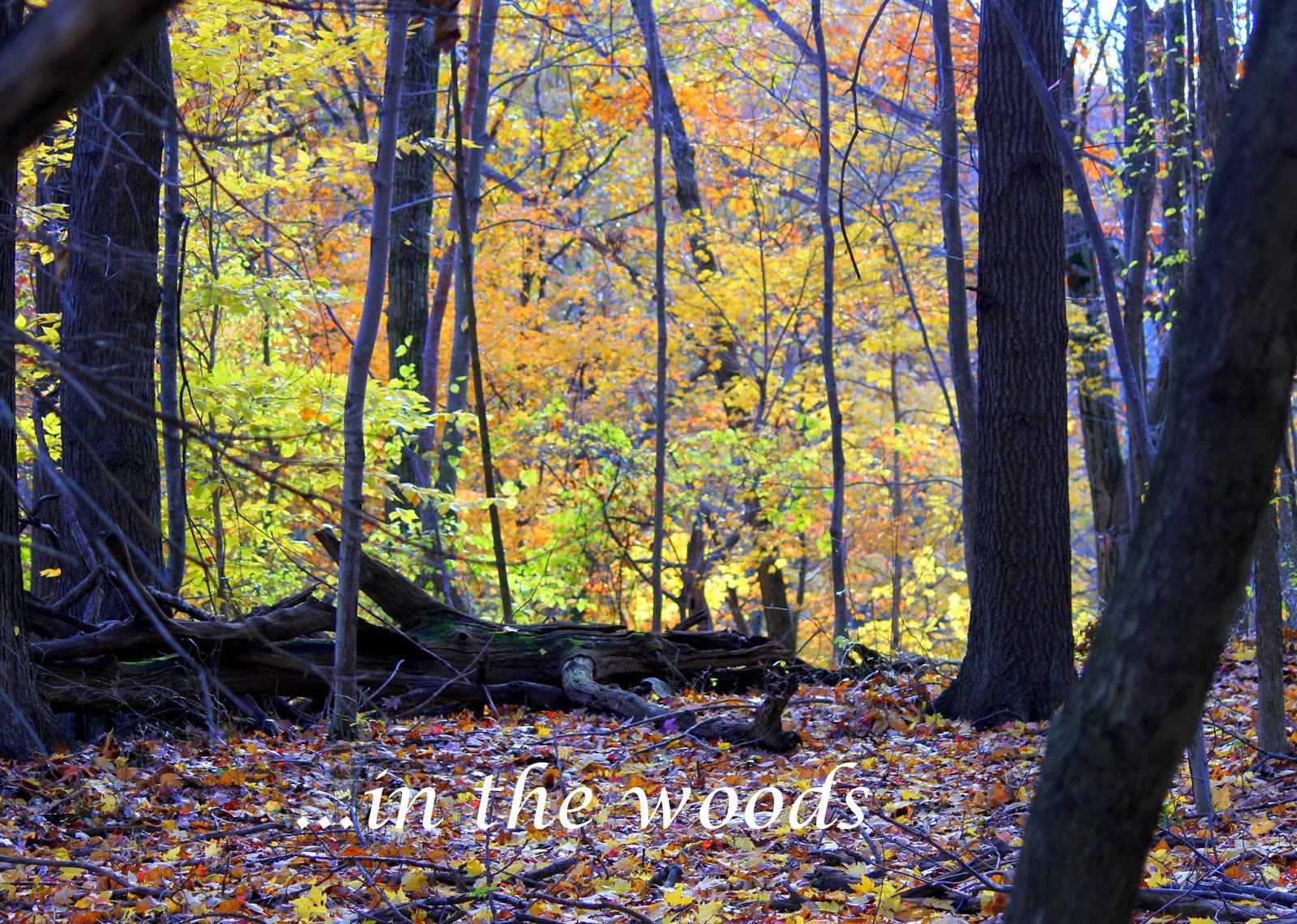
into the golden woods of autumn.

i was going to turn around,
really i was...
it would have been
the sensible thing to do.
i had bills to pay, 
groceries to buy..

but i looked in among the trees
and saw that God was there.
how could i not go in?

"i'll go in just a little,
just for a few minutes,"
i thought to myself.

but He beckoned further.

"just a bit more," i told myself.
but He drew me deeper.

it no longer mattered where i was.

deeper and deeper my heart into His,
each step a wordless prayer,
each image a vision of His glorious face.
how could i not enter and see?

and then i saw it...

down slippery slope of amber red,
 feet sinking to muddy depths -
a bubbling stream of new life,
spilling its love upon the rocks.

my fingers itched with cold,
 my stomach rumbled its hunger,
 i had no idea where i was -
and found it didn't matter.

never before had i felt less lost.

for i walked in His sacred house, 
 stood before His holy font -
and it was time to trust.
how could i not?

and so it happened...

(to Him be glory forever.)

+++


Epilogue: God led me back to my car without incident, much to my wonderment. I cannot regret this experience - it was a gift beyond measure. But for the sake of those who are kind enough to care about me, I will take my cell phone with me next time :-).

Saturday, November 2, 2013

Time of healing


(As I begin writing tonight, it is late on November 2, All Souls Day. Since I get an extra hour tonight when my clock falls back, I am indulging myself by spending it with you.)

As I was reflecting on the feast, the question arose in my mind: how often does a person go to a funeral and hear a eulogy where the deceased is remembered as a petty, selfish gossip? Or a dishonest, thieving scoundrel?

Not often, I imagine.

When people pass away, it is natural human tendency to remember the good things about them - the parts of them that we will miss. Often we overlook their faults, at least in the acute stage of grieving, so that even the drug dealer shot by the police is remembered for his ready smile or his kind heart.

And this is as it should be. Even those who travel the worst paths in life are children of God who had some good in them or brought a bit of happiness to someone's life.

Often too we grieve for the relationship we would like to have had with the deceased. The opportunity to have a closer relationship with that mother, father, sibling or friend is gone once the life ebbs from their body.

Or so it would seem.

After All Saints Day, I am glad there is day for the rest of us folks. And that is where All Souls Day comes in: a day of prayer and remembrance for the people who made some efforts at faith and goodness but stumbled a lot along the way before they died.

Most of the people we have loved fall into this category. Most of us will fall into it someday as well.

One might wonder why we should pray for the dead. Is it not over for them? Is some sort of begging or pleading on our part supposed to persuade God to let them into paradise despite their shortcomings?

Sadly, there have been periods in church history where such ideas were commonplace. The notion was that God had certain punishments prescribed for the person who dies in sin but that the living can pay off some of the debt by prayer, good works - or worse, paying money.

Such a forensic model of sin and salvation is sad, in my opinion, because it so completely misses the point. And in missing the point, people become lost from the Way.

Some will lose their direction because "paying off the debt" becomes more important than entering into relationship with God. Some may be lost because abuse of the spiritual "legal system" makes it appear to be just a scheme to make the church rich. Many more may be misled into thinking of God as a judge who exacts punishments instead of as a loving Father who longs to bring us home.

And the point is?

The true point is, I believe, that none of us are saved alone. We pray for the dead - as we pray for the living - because it draws us closer to each other and to God. In prayer for another, there is movement toward healing, there is a grace that makes whole what is broken.

The deaths of those we love may leave us with quite a variety of healing needs. We may need the healing of forgiveness. We may be challenged to forgive those who have died. Or we may ache for their forgiveness of us. We may need healing from damage inflicted on us by their sins. Or we may simply need healing from the sorrow that accompanies grievous loss.

Whatever our need, prayer with and for those who have died is the medicine our souls require in order to heal. As our prayer draws us closer to God, it simultaneously draws us closer to those who live on the other side, cleansing both them and us. We all become freer to know God in the fullness of His loving gifts.

As we enter this month of November, let us begin a "time of healing", walking together with each other and those who have passed into God's care.

Allow me to share some words that Scripture offered me today - and then an image received while walking with my camera.

On this mountain,
the Lord of hosts will prepare for all peoples
a banquet of rich food.
On this mountain He will remove
the mourning veil covering all peoples,
and the shroud enwrapping all nations,
He will destroy Death forever.
The Lord will wipe away
the tears from every cheek;
He will take away His people's shame
everywhere on earth,
for the Lord has said so.
That day, it will be said: See, this is our God
in whom we hoped for salvation;
the Lord is the one in whom we hoped.
We exult and we rejoice
that He has saved us.

(Isaiah 25: 6-9)


(God willing, I plan to write more on related themes through the month of November. Please check back or enter your e-mail address for notification of new posts. Many blessings...)

Thursday, October 31, 2013

The Feast of All the Saints


"I want to be a saint!"

I was standing in an elevator with a bishop when I made this announcement almost 40 years ago.

"I think you would make a very good saint," the bishop responded, though he had never met me before this moment. Was he just being polite? How was he supposed to respond to this odd young woman, bedecked in her sweatshirt and patched blue jeans, making such a declaration to him?
I smile when I remember that woman, my younger self. She was so enthusiastic and full of longing to share God with the world.

It seemed, at the time, that being in college was like the opening of doors into a life where I could choose who I was to be and how I was going to live.

I wanted to be a saint because God's love and healing could then flow to others through me for all eternity. I saw that this was what the saints did for me - and I wanted to join that club. What could bring me greater joy?

Looking back on this moment with older eyes, it now seems so pretentious, so naive.

Does one become a saint just by wishing it, proclaiming it? Am I so special that generations of people over the centuries will know of me to ask for my prayers?

The answer to both questions: hardly.

At that young age, I knew nothing of the hardships of life. I had no idea how hard it could be to remain faithful when afflicted in body or mind. Even now, my understanding is limited in that my own afflictions have been relatively few.

I knew that I was in love with God but I had no way of knowing how many detours there would be on the path of staying in love. I was familiar with the detour of doubt but had no perspective to see how even my wish was part of a much more dangerous detour: ego (aka the wrong sort of pride).

While reading a delightful book on Russian Orthodox monasticism recently, I came upon a powerful reminder of what the path of Love really entails:

"...a monk must have no powerful desire for anything except God. There are no exceptions. It doesn't matter what that desire might be, whether for higher rank, or more knowledge, or better health, or for some material thing, or even to become an elder, or to obtain spiritual gifts. Everything will come of itself, if such be God's will." (from Everyday Saints and Other Stories by Archimandrite Tikhon Shevkunov).

While we may all be heaving a sigh of relief now that we are not Orthodox monks (!), we are not really "off the hook" all that much. Very few if any of us will be the sort of saint that is recognized by canonization, a formal declaration of the church. However, we are all summoned to be "everyday saints", no matter how ordinary or limited our lives may be.

To be an "everyday saint" is to take my own little corner of being and allow it to be filled with God. And to be "filled" with God means that there is not room for much else - certainly not things that I want for myself - only God and whatever unexpected gifts He brings.

I cannot even bring my desire for sainthood there. Only the desire for God.

Thus, even if it is my destiny to die in obscurity, a shriveled up old woman with dementia lying in a nursing home bed, remembered by no one, that is all right. As long as God fills that little corner of space that is me, my desire is fulfilled.

(Though I would be unaware of much, I can only hope that whoever had the unfortunate task of taking care of my body at that point might detect a little brightness there because of the One who dwelt within.)

It is easy to write these words - but a far different thing to live them. I did not know that when I was an enthusiastic young college student. But I know it now.

I am so far from that Way now that I might despair - if there were no grace and no community of saints to carry me with their prayers into the safety of their fold.

It is this that I celebrate today - the "communion of saints" - the eternal community of both the canonized and the everyday saints who dwell in the presence of God and want nothing more than for you and me to join them.


...I had a vision of a great multitude,
which no one could count,
from every nation, race, people, and tongue.
They stood before the throne and before the Lamb,
wearing white robes and holding palm branches in their hands.
They cried out in a loud voice:
“Salvation comes from our God, who is seated on the throne,
and from the Lamb.”
...
Then one of the elders spoke up and said to me, 
“Who are these wearing white robes, 
and where did they come from?”
I said to him,  “My lord, you are the one who knows.” 
He said to me, “These are the ones 
who have survived the time of great distress.

(Revelation 7:  9, 14)


            St. Francis of Assisi


      St. Clare of Assisi


    St. Catherine of Genoa


    St. Elizabeth of Hungary


st therese of the child jesus photo: St Therese of the Child Jesus and the Holy Face StThereseofLisieux-1.jpg
   St. Therese of the Child Jesus


                 St. Teresa of Avila


     St. John of the Cross


   St. Mary Magdalene


   St. Maximilian Kolbe


  St. Kateri Tekakwitha


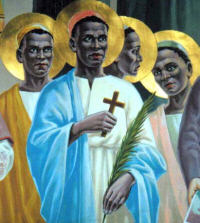
St. Charles Lwanga & companions


St. Paul Miki & companions (26 martyrs of Japan)


  Oscar Romero (not yet canonized)              


(These are only a few of the many, many saints who are part of the eternal community. Most will never be formally named by the church - but they still love us and pray for us.)


Friday, October 25, 2013

forgiveness


This evening, as I sat down to reflect on the Scripture for the day, these were the words that greeted me:

I know of nothing good living in me - living, that is, in my unspiritual self - for though the will to do what is good is in me, the performance is not, with the result that instead of doing the good things I want to do, I carry out the sinful things I do not want. When I act against my will, then, it is not my true self doing it, but sin which lives in me.

In fact, this seems to be the rule, that every single time I want to do good it is something evil that comes to hand. In my inmost self I dearly love God's Law, but I can see that my body follows a different law that battles against the law which my reason dictates. This is what makes me a prisoner of that law of sin which lives inside my body.


What a wretched man I am! Who will rescue me from this body doomed to death? Thanks be to God through Jesus Christ our Lord! (Romans 7: 18-25)


I suspect that most of us can relate to this passage. We want to do good. We plan to do what is right but often find ourselves not carrying out these intentions nearly so well as we had hoped. It is rather consoling that St. Paul wrote this about himself. If one of the greatest of the apostles felt this way, perhaps there is hope for someone like me. 

What I am about to write next, however, is much harder for most of us to relate to.

Many years ago, a man I knew mailed these very words to me, painstakingly copied in his own hand. He was writing to me from prison - where he was incarcerated for molesting little girls. 

The crime of which he was accused and convicted is considered among the most heinous in our society. To prey upon the innocence of children seems unforgivable to most of us and many of us might label such a man "a monster". 

Yet here he was writing words that any one of us might have written, "instead of doing the good things I want to do, I carry out the sinful things I do not want." And I believe that he meant those words quite sincerely.

For him to copy this passage from the Bible was a great deal more work than it would have been for most of us. He was unable to read and write. He had to look at every letter of every word, one by one, and copy its shape. I suspect it took him hours.

The tragic childhoods he most likely contributed to only reflected the one he himself had lived. He was an abused child in an adult body, a severely damaged human being who could not be permitted to live freely in society.

And yet he was a person, created in the image and likeness of God. It was not his desire to hurt children nor was it his desire to offend God. And yet undoubtedly his behavior did both.

Can God's forgiveness be granted even to someone like this? Should God's forgiveness extend to a person who does such things? If I were one of his victims, could I forgive him?

These questions drive us deep into the heart of great mystery. The mystery of  forgiveness, what it is, what it means. The mystery of God's love for his broken people. The mystery of Jesus' teaching that, in our prayers, we should ask to be forgiven as we forgive others...

On a human level, forgiveness is often defined as a cessation of anger or resentment toward another. In psychological terms, it is often regarded as a process - but also a conscious decision. If I want to hold onto my anger, most assuredly I will not let it go. If I want to renounce it, I begin the process.

It also interesting to note that, on that same human level, there is research evidence that people who forgive tend to be happier and physically healthier. (And this research was done with people who had some pretty big things to forgive, such as murder of family members in political violence.)

And yet, forgiving is so hard for us to do.

It may not be quite as hard for me to forgive the people I love. It may not be so hard to forgive offenses that I could imagine myself doing in a moment of weakness...But what about those other ones? The acts so horrible that I could never, ever imagine doing that to another human being...

And this is where the forgiveness of God enters in. Not just that God forgives me - but that, if I accept that forgiveness, truly embrace it, I become empowered to forgive on a level transcending my own very limited goodness.

It is here, in this place, that we truly meet God and begin to understand.

I myself have never faced a challenge anywhere close to this and therefore it would seem false for me to try to explain. But I can share with you someone who has.

Corrie ten Boom and her sister, Betsie, were imprisoned during World War II at the Ravensbruck, a concentration camp for women. Their crime? Concealing Jews in their home in Holland. Betsie died in the camp. Corrie survived - and went on to preach to people around the world about God's forgiveness.

In the short video that follows, she tells of a meeting of a man following one of her talks in Germany. Listen with me:


(Excerpt from Corrie ten Boom's autobiography, The Hiding Place):

It was in a church in Munich that I saw him, a balding heavy-set man in a gray overcoat, a brown felt hat clutched between his hands. People were filing out of the basement room where I had just spoken. It was 1947 and I had come from Holland to defeated Germany with the message that God forgives. ...

And that's when I saw him, working his way forward against the others. One moment I saw the overcoat and the brown hat; the next, a blue uniform and a visored cap with its skull and crossbones. It came back with a rush: the huge room with its harsh overhead lights, the pathetic pile of dresses and shoes in the center of the floor, the shame of walking naked past this man. I could see my sister's frail form ahead of me, ribs sharp beneath the parchment skin. Betsie, how thin you were!

Betsie and I had been arrested for concealing Jews in our home during the Nazi occupation of Holland; this man had been a guard at Ravensbruck concentration camp where we were sent. ...

"You mentioned Ravensbruck in your talk," he was saying. "I was a guard in there." No, he did not remember me. "But since that time," he went on, "I have become a Christian. I know that God has forgiven me for the cruel things I did there, but I would like to hear it from your lips as well. Fraulein, ..." his hand came out, ... "will you forgive me?"

And I stood there — I whose sins had every day to be forgiven — and could not. Betsie had died in that place — could he erase her slow terrible death simply for the asking?

It could not have been many seconds that he stood there, hand held out, but to me it seemed hours as I wrestled with the most difficult thing I had ever had to do.

For I had to do it — I knew that. The message that God forgives has a prior condition: that we forgive those who have injured us. "If you do not forgive men their trespasses," Jesus says, "neither will your Father in heaven forgive your trespasses." ...

And still I stood there with the coldness clutching my heart. But forgiveness is not an emotion — I knew that too. Forgiveness is an act of the will, and the will can function regardless of the temperature of the heart. "Jesus, help me!" I prayed silently. "I can lift my hand, I can do that much. You supply the feeling."

And so woodenly, mechanically, I thrust my hand into the one stretched out to me. And as I did, an incredible thing took place. The current started in my shoulder, raced down my arm, sprang into our joined hands. And then this healing warmth seemed to flood my whole being, bringing tears to my eyes.

"I forgive you, brother!" I cried. "With all my heart!"

For a long moment we grasped each other's hands, the former guard and the former prisoner. I had never known God's love so intensely as I did then. 


Sunday, October 20, 2013

Week of Light: Day 7


It is with a heart full of gratitude that I approach my blog tonight to wrap up the Week of Light and the project of the 7 holy pauses. I have learned and grown so much.

Those who have been reading regularly may recall that in July, as an act of contrition for having neglected my blog for over a month, I made a commitment to post every day for a week on one of 7 words: hope, peace, grace, mercy, love, joy and light. Then I invited readers to share any art, poetry, photos, etc. on these topics and promised to post them two weeks later.

When I found that I had very few contributions by early August, I decided that I would post the ones submitted and make up the difference myself - 7 days straight for each of the holy pauses.

It seemed almost an impossible challenge to lay upon myself. Where would I get the time? How would I think of enough to write about - that would add up to 49 posts - more than twice the number I had done in any previous year?

I did not have the answers to these questions. And that is perhaps one of the most important lessons I have learned. I did not need to have the answers. What I needed to do was make a commitment based on faith and then live it out one day at a time.

The faith that fueled my leap into this frenzy of blogging certainly wasn't faith in myself. As I have commented on and off throughout, I have most often not had any idea what I was going to write and sometimes sat down feeling too exhausted to write anything.

A second important lesson learned was that often this was a good thing. When I was feeling empty and depleted, I was best able to recognize my dependence on God. If I thought for a moment that I was full of good ideas or poetry or art, I would not feel such a need to turn to Him. And that would have been a great loss - surely for me and likely for you as well.

Turning to God to help me blog - it sounds so silly - as though the Creator of the universe would be concerned about what I posted on the Internet! And yet, time after time, it has been made clear to me that I was not alone in this endeavor, that the holy One used my keystrokes to express His love for you and me.

If that should sound grandiose, please know that my intent is quite the opposite: I feel very humbled by this entire process. A friend commented to me today about some of the late hours at which I posted. I found that often I couldn't stop until I was finished.

(And it wasn't just me being compulsive about my commitment to get it done on the same day, though I don't deny that factor!).

When I was writing The Broken Wing, part 2, for example, I needed to find out how the story was going to end. How was this painful question of God allowing the little one to suffer going to be resolved? I truly didn't know. But I kept typing until the resolution made itself known.

There have been many times when I have been stuck in the middle of a post, not knowing where it was going, and paused to ask God for help. And help always came. That does not mean, of course, that I think that everything posted here is brilliant and divinely inspired. Certainly not!

It does means that I have learned more profoundly how much I need and want to turn to God for help in all that I do. There is much greater hope, peace, love and joy in my life when I rely on His grace and mercy, bringing my confusions and dilemmas into His light.

I am not sure that I ever explained why I have referred to these words as "holy pauses". If I have forgotten, perhaps you have as well. I first heard the phrase from Christine at Abbey of the Arts. While it more than I can explain here, I learned through a number of online retreats with her the importance of "pausing" to remember the holy in the midst of our busy days.

The Catholic church accepts the exhortation to "pray without ceasing" (1 Thessalonians 5:17), with seven pauses for prayer each day. Most people outside of religious life do not have the time to incorporate all of these prayers as they are written in the Divine Office. However, we can all "pause" for a minute or two 7 times a day to remember God - and these words became the themes of my pausing.

So...let us pause once more with the Light. I would like to share with you a poem and an image.

I wrote the poem earlier this year as part of an online class through the Abbey. We were offered the first line of a famous poem to use as the beginning our own poem. Thus, the first line of the following poem was first penned by William Carlos Williams.

(I am offering the option for you to listen to my poem if you prefer that to reading it - or do both. Just click on the little arrow and it will play.)


so much depends upon
me – or so i had imagined –
until one day, i was no more.

it is hard to say just how it happened.
it was a gentle, loving sort of thing
hardly noticed for all its power –

much like morning dew
imperceptibly drawn into
sun’s warming rays

or like summer’s long shadows
sinking with setting sun
into peaceful darkness.

once gone, all the longings,
needs and rages of old
seemed but a bit of dust.

it was, in the end,
only the Light that mattered –
glory upon glory to Him.

amen.


Many blessings...I will be taking a bit of a break but plan to be back posting about something or other before too long. Remember that you can sign up for e-mail notification (upper left corner) if you would like to know when I have posted.